

Five years from now, you'll probably wish you'd started investing with Stock Advisor
Join over half a million premium members receiving:
- New stock picks each month
- Detailed analysis of companies
- Model portfolios and advanced tools
- Live streaming during market hours
Stock Advisor Returns
+606%
S&P 500 Returns
+144%
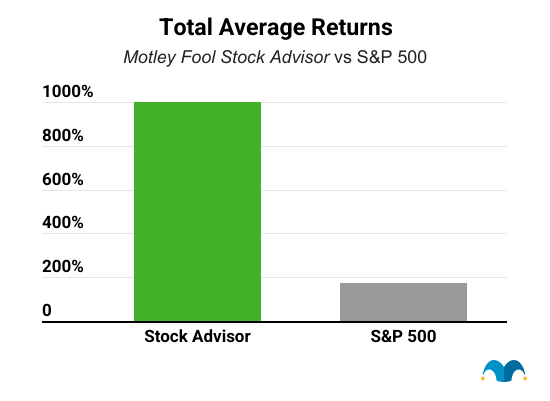
Returns as of 04/23/2024. Stock Advisor launched in February 2002.
Featured Investing News

This High-Yield Stock's More Conservative Approach Could Pay Big Dividends Down the Road

Vertex Pharmaceuticals Just Made 2 Big Moves. Is the Stock a Buy?

Time to Pounce: 2 Phenomenal Ultra-High-Yield REITs That Haven't Been This Cheap in Years

This Technology Company Is Being Acquired at a Shocking 207% Premium -- and These 2 Stocks Could Be Next
Trending News
- It's Time to Ditch These 2 "Magnificent Seven" Stocks and Replace Them With 2 Bona Fide Outperformers
- Former House Speaker Nancy Pelosi Can't Stop Buying the 1 Artificial Intelligence (AI) Stock Billionaires Have Been Eager to Sell
- Down 80%, Is Carnival Stock a Once-in-a-Generation Investment Opportunity?
- The UItimate Cryptocurrency to Buy With $1,000 Today
- 1 No-Brainer ETF to Buy With $100 Right Now
- 2 Artificial Intelligence (AI) Stocks That Could Fall 19% and 65%, According to a Pair of Wall Street Analysts
- The U.S. Is About to Spend Hundreds of Billions on Infrastructure: 3 ETFs to Reap the Benefits
- Billionaire Investor Bill Gates Has 81% of His $46 Billion Portfolio in Just 4 Stocks
- Should You Buy Microsoft Stock Before Thursday?
- Is a Living Trust Really the Best Way to Pass an Inheritance to Your Family?
- The S&P 500 Is Near Its Record High: Here's What Warren Buffett Is Doing
- Could TSMC Become the Next Nvidia?
- 3 Artificial Intelligence (AI) Stocks That Are Screaming Buys in April
- Opinion: These 2 "Magnificent Seven" Stocks Will Be the Largest Companies in the World by 2030
- This Is Hands Down My Pick for the Best "Magnificent Seven" Stock Right Now. (Hint: It's Not Nvidia.)
Popular Topics
Best Stocks to Buy In 2024
Here are 10 stocks that could be excellent additions to your portfolio for the rest of 2024 and for years to come.
Top AI Stocks to Buy
Learn how you can make money investing in the wave of seasoned companies innovating in AI.
How to Invest in OpenAI & ChatGPT
Learn about the new AI chatbot dominating the internet.
6 Steps to Learn How to Buy Stocks
Here's a guide on what you need to do to get started with stock investing.
Top Marijuana Stocks to Invest In
The continued legalization of marijuana means growth for companies in this sector.
Best ETFs to Buy
Exchange-traded funds tend to be less volatile than individual stocks and provide portfolio diversification.
Top 3 S&P 500 Index Funds
Find out which index funds tracking the S&P 500 have the lowest fees and most closely track the market.
5 Top Hydrogen Stocks to Watch
A look at some of the leading hydrogen energy stocks that investors should keep an eye on.
High-Yield Dividend Stocks to Buy Right Now
A list of 20 high-yielding dividend stocks to consider buying now.
Dictionary of Financial Terms
The Motley Fool's list of financial terms. Making the world smarter, happier, and richer.
About The Motley Fool
Our Purpose: To make the world smarter, happier, and richer.
Founded in 1993 by brothers Tom and David Gardner, The Motley Fool helps millions of people attain financial freedom through our website, podcasts, books, newspaper column, radio show, and premium investing services. We believe that investing is empowering, enriching, and fun. We look forward to joining you on your journey to financial independence. Learn More
The Motley Fool Investing Philosophy
Learn How We Invest-
#1 Buy 25+ Companies Over Time
-
#2 Hold Stocks for 5+ Years
-
#3 Add New Savings Regularly
-
#4 Hold Through Market Volatility
-
#5 Let Your Winners Run
-
#6 Target Long-Term Returns
Investing Solutions Designed To Make Money Over The Long Term
Become a member today

Stock Advisor
Our base-level-membership giving you the foundation of a Foolish portfolio
Our Goal
Help members earn a positive return and build the foundations of a portfolio backed by Motley Fool principles.
Designed For
Individuals who are seeking easy-to-use guidance on investing in more familiar-named companies.
Recommended Minimum Portfolio Size
$5,000 +
Key Features
- Monthly stock recommendations (usually large and mid-cap stocks)
- Portfolio allocation guidance via The Motley Fool's Allocator tool
- On-going coverage of prior recommendations
- Access to Motley Fool Live video stream

Epic Bundle
A bundled membership that combines our four foundational stock-investing services into one
Our Goal
Help members outperform the benchmark by gaining exposure to a wider variety of stocks and investments.
Designed For
Individuals who are regularly adding new money to their brokerage accounts, interested in business, and want to spend more time learning the art of investing.
Recommended Minimum Portfolio Size
$25,000 +
Key Features
- Includes access to Stock Advisor + Rule Breakers + Everlasting Stocks + Real Estate Winners
- Weekly stock recommendations (ranging from small to large-cap stocks)
- Portfolio allocation guidance via The Motley Fool's Allocator tool
- On-going coverage of prior recommendations from all included services
- Access to Motley Fool Live video stream